



.jpg?cx=0.5&cy=0.5&cw=150&ch=120&blr=False&hash=32CFC9647F516D159375559BB5C39EFD)


.jpg?cx=0.490000009536743&cy=0.540000021457672&cw=150&ch=120&blr=False&hash=93ED4F6DFD0EB29BB2E466E6DDD7C794)










How To Reduce the Appearance of Pesky Ingrown Hairs
June 15, 2026

Key Takeaways:
Prevention Is Key: Prep skin with shaving cream, use a sharp razor, shave in the direction of hair growth, and exfoliate regularly to help keep ingrown hairs at bay.
Treat Ingrowns Gently: As tempting as it might be, don’t pick or squeeze ingrown hairs. Instead, use gentle exfoliating cleansers or targeted serums to help release trapped hairs and soothe irritation. Persistent or painful bumps may require a dermatologist’s care.
Consider Alternatives for Long-Term Solutions: Trimming instead of shaving/waxing reduces risk, and permanent options like laser hair removal can prevent ingrowns altogether. Just consult a professional to find the method that works best for your needs.
What Is an Ingrown Hair?
An ingrown hair is a strand of hair that grows back into or gets trapped beneath the skin after hair removal. When this occurs, a small bump—usually reddish or brownish in color—develops over the hair follicle. These bumps are often referred to as razor bumps, though, as the Mayo Clinic notes, they can also develop after waxing or tweezing your hair.
What Causes Ingrown Hairs?
Nearly any form of hair removal can lead to an ingrown hair. Normally, when hair grows, the tip of the strand emerges from the skin and continues to grow outward. In some cases, though, the tip can curl over itself and grow back into your skin. When this happens, the area may become red and irritated. While anyone who shaves, plucks, or waxes their hair can develop ingrowns, they’re most common among those with coarse, curly hair, per the Cleveland Clinic.
Do Ingrown Hairs Go Away On Their Own?
Ingrown hairs often resolve by themselves after a week or two, the Cleveland Clinic notes. However, the discoloration they leave behind can linger for months or more. To avoid worsening ingrown hairs, don’t squeeze, pick at, or try to pop them—doing so can further irritate your skin. If the area around the ingrown hair is painful to the touch or accompanied by pus (or the ingrown hasn’t resolved itself within a few weeks’ time), it may be a good idea to schedule a visit with your dermatologist.
How Do You Get Rid of Ingrown Hairs?
If you notice an itchy red bump appear after shaving or waxing, don’t stress—there are a few steps that may help address the issue at home.
Start by adding exfoliation to your regular routine. Exfoliating helps remove dead skin cells, which can help the hair’s natural release. If the ingrown hair is on your face, lather up with a gentle, non-abrasive exfoliating cleanser. The Kiehl’s Facial Fuel Scrub is designed to help cleanse skin by lifting away dirt and oil, and supports the minimization of ingrown hairs (and other shaving-related skin irritations).
For your body, you could use a body scrub or opt for an ingrown hair treatment like the Kiehl’s Ingrown Hair and Tone Correcting Intimate Drops. This quick-drying formula, which contains jojoba oil and a trio of alpha-hydroxy acids, also helps minimize the appearance of ingrown hairs and supports a more even skin tone—a serious bonus for those prone to dark spots. It’s suitable for all skin types and can be used anywhere you typically get ingrowns, including the armpits and bikini area (it’s dermatologist and gynecologist-tested for safety). To use it, vigorously shake the bottle, then dispense a few drops onto your fingertips and pat the fast-absorbing formula onto clean, dry skin.
If at-home treatments don’t seem to help much, consider scheduling a visit with your dermatologist. A board-certified dermatologist may be able to safely remove ingrown hairs, even deep ones, safely. If the area is highly irritated, they may also prescribe an ointment or cream to help your skin recover.

How To Prevent Ingrown Hairs: 7 Tips
There are plenty of great products for ingrown hairs available—but truly, the best way to manage ingrowns is by adopting habits that help prevent them from occurring. Here are seven tips to help you do just that.
1. Use shaving cream or gel
If you shave, prepping the area with shaving cream is a must. Shaving cream provides slip, which helps the razor glide evenly over your skin. This, in turn, can help address the risk of cutting your hair unevenly or having to shave over the same area multiple times. It also helps support the minimization of other shaving-related concerns, like razor burn (which can be just as frustrating to deal with as razor bumps).
2. Shave in the direction of hair growth
Shaving “against the grain” (in the opposite direction of hair growth) may get you a closer shave, but it also increases your risk of developing ingrown hairs. That’s because shaving against the grain cuts the hair at a sharp angle, which increases the likelihood that the tip of it will pierce your skin as it grows back. To keep ingrowns at bay, it’s best to shave in the direction of hair growth.
3. Replace your razor
According to the American Academy of Dermatology (AAD), shaving with a dull blade significantly increases the risk of developing razor bumps. Aim to swap out your razor—or replace the blades—after every five to seven uses to ensure you’re shaving with a clean, sharp blade.
4. Exfoliate regularly
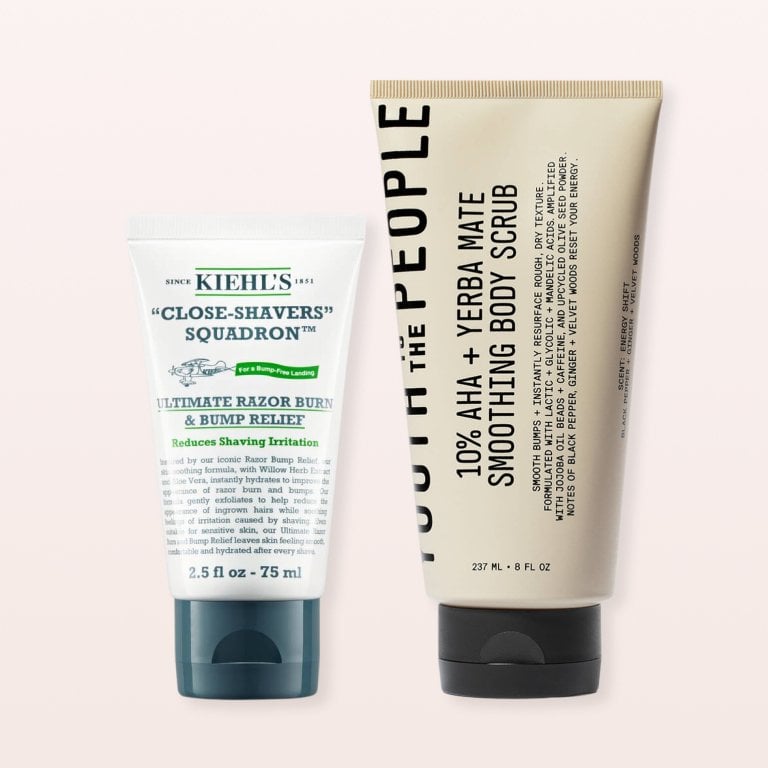
Exfoliation isn’t only useful for managing existing ingrowns—it can also help prevent dead skin cell buildup that makes developing ingrowns more likely. You can exfoliate with a washcloth or loofah, but the AAD suggests opting for a gentle chemical exfoliant if you have dry or sensitive skin. Consider swapping out a go-to cleanser for an option with alpha-hydroxy acids (AHAs) or beta-hydroxy acids (BHAs). A recommended exfoliant is the Youth to the People 10% AHA + Yerba Mate Smoothing Energy Body Scrub. The formula, which features both physical and chemical exfoliants, is designed to help address congested pores and support the appearance of smoother texture. It also features an energizing fragrance with notes of spicy black pepper, ginger, and velvet woods, which some may find helps elevate their shower routine.
5. Use a post-shave treatment
Whether you shave, wax, or tweeze, it’s a good idea to follow up your hair removal method of choice with a targeted treatment designed to help keep ingrowns and irritation at bay. A good cream for ingrown hair prevention will typically contain gentle exfoliants, such as alpha-hydroxy acids, alongside hydrating ingredients to help soothe the skin. The best lotion for ingrown hair will depend on your skin type and the area you’re looking to treat. Kiehl’s Ultimate Razor Burn & Bump Relief is a suitable option for those prone to ingrowns on the face and neck (in other words, the beard area).
6. Trim instead of shaving or waxing
Shaving, waxing, and tweezing remove the hair at the surface of the skin or lower, which increases the risk of it curling back into your skin as it grows out. If you’re having a hard time with ingrowns, consider trimming your hair instead—you won’t get that silky-smooth, hairless feel, but your risk of developing painful razor bumps will likely decrease.
7. Consider permanent hair removal
Permanent hair removal—like electrolysis or laser hair removal—destroys the hair follicles so hair can no longer grow from that area. With no hair to remove, you won’t need to shave, tweeze, or wax—which, by extension, decreases your risk of developing ingrowns. Keep in mind that permanent hair removal can be very costly, and efficacy may vary depending on your skin tone and hair type. If you’re considering taking the plunge, speak with your dermatologist beforehand and make sure to get your treatments with a well-established, licensed hair removal technician.
This article has been updated for accuracy, clarity, and relevant product data since its original publication.
Select product references and links have been updated since original publication.


Read more

EXPLORE BY TOPICS AND BRANDS
- body-care
- Hair Removal
- video-embed
- Embedded Video
- Kiehl’s
- Youth To The People