










Which Peptides for Anti-Aging Improve Visible Wrinkles and Firmness?
October 07, 2026

Key Takeaways:
- Lightweight peptide serum: L’Oréal Paris RevitaLift Triple Power Tri-Peptides Age-Defying Serum blends a tri-peptide complex with vitamin C and hyaluronic acid to visibly target wrinkles, sagging, and loss of firmness.
- Richer peptide cream: Lancôme Rénergie H.P.N. 300-Peptide Cream combines 300+ peptides with hyaluronic acid and niacinamide to address wrinkles, firmness, and dryness.
- Daytime hydration: L’Oréal Paris RevitaLift Triple Power Anti-Aging Moisturizer delivers hydration, supports firmness, sagging skin, elasticity, and radiance—ideal after your serum.
- Nighttime comfort: L’Oréal Paris RevitaLift Triple Power Rich Night Moisturizer seals in moisture and comfort layered over a peptide serum.
Not all peptides tackle the same issues:
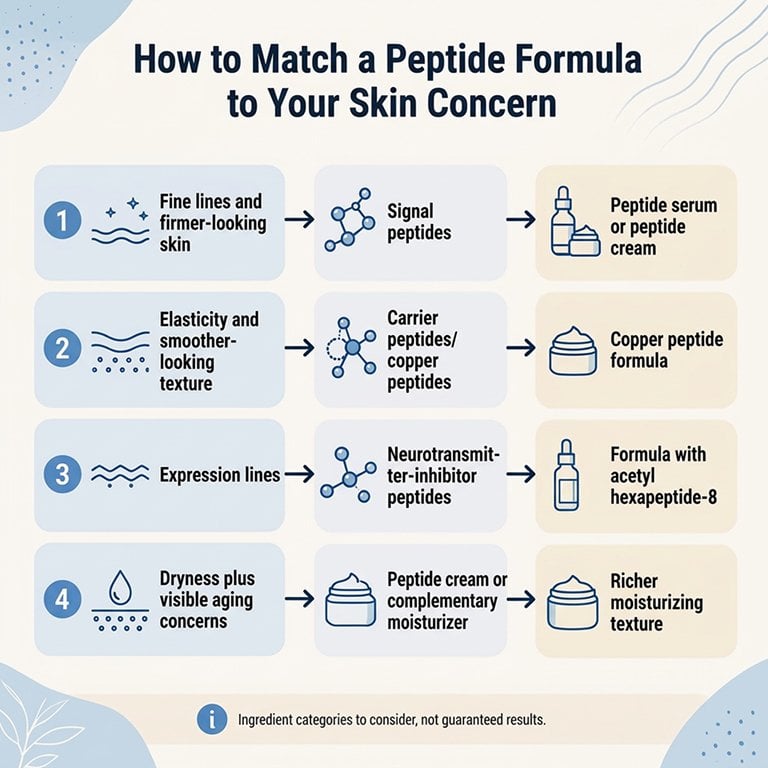
- Signal peptides help target fine lines and firmer-looking skin.
- Carrier peptides (like copper tripeptide-1) support elasticity and resilience.
- Neurotransmitter-inhibitor peptides are designed to soften the appearance of expression lines.
The ideal peptide for you comes down to what you want to address and the texture you prefer. Whether it’s a potent serum, a rich cream, or a combination of both, choosing the right formula is key for visible results.
Not sure where to begin? Start by pinpointing your primary signs of aging, then look for peptide-forward formulas targeting those exact needs.
What Are Peptides, and How Do They Help Aging Skin?
Peptides are short chains of amino acids—the building blocks of proteins like collagen and elastin that keep skin firm, smooth, and resilient. In skincare, carefully formulated peptides play a key role in targeting visible signs of aging. Depending on the type, peptides can help support firmer-looking skin, smoother texture, and a more supple appearance over time.
As collagen and elasticity naturally decline, wrinkles and sagging become more noticeable, making peptides a smart addition to any age-defying routine. Keep in mind: visible results depend not just on the peptide itself, but on the entire product formula—the concentration, stability, delivery system, supporting ingredients, and regular, consistent use all influence what you’ll see in the mirror.
| Main Concern | Peptide Category | Ingredient Examples | What to Expect |
| Fine lines and loss of firmness | Signal peptides | Palmitoyl pentapeptide-4, palmitoyl tripeptide-1 | Gradually smoother, firmer-looking skin |
| Reduced elasticity or resilience |
Carrier peptides |
Copper tripeptide-1 |
Improved appearance of elasticity and texture |
| Expression lines | Neurotransmitter-inhibitor peptides | Acetyl hexapeptide-8 | Softer-looking lines associated with repeated movement |
| Collagen breakdown | Enzyme-inhibitor peptides | Formula-specific peptide complexes | Support for the appearance of the skin’s existing structure |
Which Peptides Help Improve Fine Lines and Skin Firmness?
Signal peptides are a go-to for targeting visible signs of aging like fine lines and loss of firmness. These peptides, such as palmitoyl pentapeptide-4 and palmitoyl tripeptide-1, are frequently found in skincare formulas that aim to support the skin’s natural collagen processes. By encouraging a firmer, smoother look, signal peptides are formulated to help address the appearance of wrinkles and improve skin’s overall texture over time.
Can Copper Peptides Help Improve Skin Elasticity?
Carrier peptides—like copper tripeptide-1—are prized for supporting skin’s resilience and elasticity, often leaving skin looking smoother and more supple. Unlike signal peptides, which target firmness by “signaling” skin to support collagen, copper peptides work by helping to deliver essential minerals to the skin. They’re best seen as a distinct category: not necessarily stronger, but designed to be effective for improving bounce and texture rather than addressing every type of wrinkle or firmness concern.
Which Peptides Target the Appearance of Expression Lines?
Neurotransmitter-inhibitor peptides are often featured in skincare formulas aimed at softening the appearance of lines from repeated facial movements—think forehead creases or crow’s feet. Acetyl hexapeptide-8 is a common example you’ll spot on ingredient lists. While these peptides can help smooth the look of expression lines, it’s important to note that their effects are not as dramatic or immediate as injectables, but they can be a gentle, topical option for those looking to address early or stubborn expression lines.
Which Peptide Products Should You Consider for Wrinkles and Firmness?
When building an anti-aging skincare routine, it’s helpful to distinguish between targeted peptide treatments and supporting moisturizers. A peptide serum offers a lightweight option that directly addresses visible wrinkles and loss of firmness—ideal for those looking to boost results without a dense feel. For deeper hydration, a peptide-rich cream provides both moisture and anti-aging benefits in a more conditioning texture.
| Main Concern | Peptide Option | Key Ingredients | When to Use |
| Visible wrinkles and loss of firmness / Lightweight peptide treatment | L’Oréal Paris Triple Power Tripeptide Serum | Tri-peptides, vitamin C, and hyaluronic acid | Use after cleansing and before moisturizer, AM or PM. |
| Wrinkles plus dryness / Peptide treatment and moisture in one cream | Lancôme Rénergie H.P.N. 300-Peptide Cream | 300 peptides, hyaluronic acid, and niacinamide | Use after cleansing and any serum, AM or PM. |
| Daytime hydration after peptide serum / Complementary moisturizer | L’Oréal Paris Triple Power Revitalift Moisturizer | Pro-Retinol, hyaluronic acid, and vitamin C | Use after peptide serum during the day when you want a separate moisturizing step; follow with broad-spectrum sunscreen. |
| Overnight dryness or need for richer moisture / Nighttime moisturizer | L’Oréal Paris Revitalift Triple Power Rich Night Moisturizer | Glycolic acid, hyaluronic acid, and vitamin C | Use after peptide serum at night when skin needs a richer final moisturizing step. |
Should You Use Peptides or Retinol for Wrinkles and Firmness?
Both peptides and retinol are proven allies in anti-aging skincare, but they support skin in different ways. Peptides are ideal for promoting firmer-looking skin and smoothing the appearance of fine lines and texture, making them great for anyone seeking gentle, supportive care. Retinol, on the other hand, is a go-to for tackling more pronounced signs of aging and visibly uneven texture, by encouraging refreshed skin appearance.
Some routines combine both peptides and retinol for a comprehensive approach—just be sure to follow product instructions and monitor your skin’s tolerance when layering these potent ingredients. Vitamin C can also be a valuable complement, as it’s often found in anti-aging formulas.
How Do You Add Peptides to Your Anti-Aging Skincare Routine?
- Cleanse Gently
- Remove makeup, sunscreen, and surface debris.
- Pat skin dry without rubbing.
- Apply a peptide serum
- Use the amount stated on the product label.
- Smooth it onto the face and neck.
- Allow it to settle before layering.
- Apply moisturizer
- Choose a texture suited to your skin type.
- Apply it onto your skin
- Use daytime sunscreen
- Choose a broad-spectrum SPF 30 or higher.
- Apply it as your final morning skincare step.
- Apply makeup, if desired.
Why Am I Not Seeing Results from My Peptide Serum?
- Visible results can take time and may vary depending on the specific peptide, the finished formula, and how the product is evaluated.
- Some formulas may improve the appearance of fine lines or skin texture without producing substantial changes in deeper wrinkles or visible sagging.
- Inconsistent use can make it difficult to tell whether a peptide serum is supporting firmer-looking skin or smoother texture.
- The product’s formulation, texture, and supporting ingredients can influence how noticeable the visible effects are over time.
- A peptide serum should not be expected to produce dramatic changes in established wrinkles or skin laxity, even with continued use.
- Taking consistently lit photos over time can make subtle changes in texture, firmness, or fine lines easier to compare.
Your Peptides-for-Anti-Aging Questions, Answered
Which peptide is used for skin tightening?
Signal peptides are often used in formulas for firmer-looking skin, while copper tripeptide-1 may appear in products focused on elasticity and smoother-looking texture. Topical peptide products can help improve the appearance of firmness, but they do not physically tighten skin.
How long do peptides take to work?
Peptide results vary by formula, product claim, and consistency of use. Rather than expecting one universal timeline, check the product’s substantiated evaluation period and use it as directed before judging visible results.
Can peptides be used every day?
Many peptide serums and creams are designed for daily use, but the right frequency depends on the product directions and how your skin responds. If dryness or discomfort develops, use it less often or simplify the rest of your routine.
Can peptides and retinol be used together?
Peptides and retinol can be used in the same routine for some people, but compatibility depends on the formulas and skin tolerance. If layering causes dryness or irritation, use them at different times of day or on alternating nights.
Can peptides and vitamin C be layered?
Yes, peptides and vitamin C can appear together in finished formulas, and some routines may include both. Follow the directions for each product, avoid layering duplicate formulas unnecessarily, and scale back if the combination feels uncomfortable on skin.
Are peptides suitable for sensitive skin?
Peptides can be included in formulas made for sensitive skin, but the full ingredient list still matters. Introduce one new product at a time, patch test when appropriate, and stop using the product if irritation occurs.
Can peptides help with deep wrinkles or sagging skin?
Peptide formulas may help improve the appearance of fine lines, firmness, and smoother-looking texture, but they should not be viewed as a replacement for professional treatments that address more established wrinkles or visible skin laxity. Think of peptides as a more gradual, appearance-focused course of action rather than a drastic quick fix.
Matching Your Peptide Type to Your Anti-Aging Goal
Signal peptides are especially relevant for visible wrinkles and firmness, while carrier peptides and neurotransmitter-inhibitor peptides address different cosmetic concerns. Choosing the right peptide product starts with matching the formula type to the concern you want to address.
Editorial disclosure: This article reflects editorial research and brand formulation data. Product recommendations are based on ingredient analysis and brand claims.


Read more