













How to Choose the Right Sunscreen for Your Skin Type
July 20, 2026

How Do You Choose Sunscreen for Oily, Dry, Sensitive, or Combination Skin?
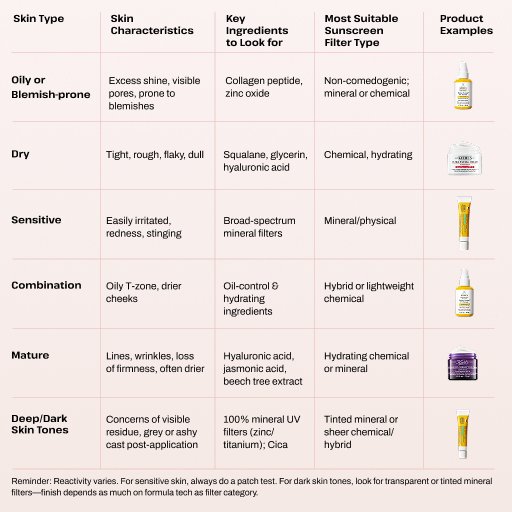
Choosing the right sunscreen starts with understanding your skin’s unique needs. If your skin feels tight post-cleansing, you probably have dry skin. Shiny by noon? Most likely oily. If your T-zone is glossy but your cheeks are dehydrated, you may be combination. If new products trigger stinging or redness, consider yourself sensitive. Recognizing your skin pattern is the first step to sunscreen success.
What Do Sunscreen Ingredients Do For Your Skin?
A new generation of sunscreens does more than just shield you from UV rays—they can actively support your unique skin goals thanks to multifunctional ingredients found in many formulas. Beyond traditional SPF filters, many of today’s sunscreens offer added skincare benefits, whether your concern is hydration, oil control, sensitivity, or anti-aging.
Key Multi-Tasking Sunscreen Ingredients:
- Niacinamide: A vitamin B3 derivative that helps support balanced oil production and may visibly refine pores, making it ideal in formulas for oily or blemish-prone skin.
- Ceramides: These lipids support the skin barrier and aid in moisture retention, which is especially beneficial for dry or mature skin types.
- Hyaluronic Acid (HA): A powerful humectant that attracts water to the skin, HA features in hydrating sunscreen formulas that target dryness and enhance skin plumpness.
- Squalane & Glycerin: Plant-based emollients that lock in hydration and help maintain a healthy moisture barrier—look for these in SPF creams for dry or dehydrated skin.
- Zinc Oxide & Titanium Dioxide: Mineral UV filters that provide gentle, broad-spectrum physical protection. Favorable for sensitive skin or those following clean beauty routines; new “no white cast” and sheer formulas are ideal for all tones.
- Chemical UV Filters (e.g., Avobenzone, Oxybenzone, Octinoxate): Lightweight, often invisible on skin, these are used for formulas aimed at providing a sheer finish. Many recent searches reflect consumer desire for chemical-free alternatives, so always check for preferences/allergies.
- Iron Oxides: Pigmented minerals used in tinted mineral sunscreens. They help minimize visible white cast and allow for a tone-adaptive finish beneficial for deeper and dark skin tones.
- Vitamin C & Vitamin E: Antioxidants that help defend against oxidative stress and support brightening or moisture comfort. These can address dullness and complement broad-spectrum protection.
- Peptides & Collagen Peptides: Found in sunscreens for mature skin, these proteins help support firmness and a visibly smoother, more even complexion.
- Jasmonic Acid & Beech Tree Extract: Botanical actives in anti-aging sunscreens that help with firmness, renewal, and resilience, often alongside SPF in premium formulations.
- Cica (Centella Asiatica): Calming botanical known for reducing visible redness and supporting barrier repair—beneficial in mineral formulas for sensitive or stressed skin.
- Aloe Vera: Naturally soothing, aloe provides relief to dry, irritated, or sun-exposed skin and is a staple in gentle SPF blends.
- Salicylic Acid: An exfoliating acid sometimes used in non-comedogenic sunscreen for oily or acne-prone types to help unclog pores and prevent breakouts.
- Retinol: Seen in premium and “anti-aging” SPF categories; may help accelerate skin renewal and reduce the signs of aging, but use with caution and always with broad-spectrum protection.
The ingredient landscape is evolving: Zinc oxide and mineral SPFs drive clean beauty conversations, while demand for multi-functional (hydrating or brightening) sunscreens is soaring. When selecting a formula, check the ingredient list for these benefits and think about your skin’s unique daily needs!
What’s the Difference Between Mineral (Physical) vs. Chemical Sunscreens?
Sunscreens typically cluster into three main categories: mineral, chemical, or hybrid. The main differences lie in how each formula is structured, how it feels on the skin, and which skin types it may best suit.
| Sunscreen Type | How It Works | Skin Types It Suits | Finish |
| Mineral (zinc/titanium) | Sits on skin; shields by reflecting/absorbing | Sensitive, oily, dark (in new formulas) | Matte to natural; may leave a white cast |
| Chemical (avobenzone etc.) | Absorbs/neutralizes UV energy in the skin | Dry, combination, deeper tones | Lightweight, invisible, dewy |
| Hybrid | Combines both filter types | Combination, fans of lighter minerals | Sheer, skin-tone adaptable |
Both mineral and chemical filters chiefly absorb UV energy, but only minerals also scatter some rays.
Layering Guidelines
To get the most out of your sunscreen and ensure you’re protected, keep these essential do’s and don’ts in mind:
Do:
- Apply sunscreen as the final step of skincare, letting it set before makeup for even coverage.
- Pair with other protective measures: shade, hats, sunglasses, and avoid peak UV (10AM-4PM).
- Check sunscreen expiration and store in a cool, dark location. Most remain effective until marked expiration date; discard if separated or discolored.
Don’t:
- Mix sunscreen into your moisturizer or foundation—this dilutes its protection.
- Use last year’s opened sunscreen if it’s been exposed to heat or sunlight; stability drops with time and temperature.
Frequently Asked Questions
What is the difference between SPF 30 and SPF 50?
SPF 30 protects against about 97% of UVB rays; SPF 50 about 98%. The difference is marginal, but SPF 50 may suit those with prolonged outdoor exposure or lighter skin types more prone to burning. Frequent, liberal application is more important than chasing higher numbers.
Can I just use my moisturizer with SPF instead of sunscreen?
Moisturizers with SPF are convenient for daily, low-sun exposure activities. However, for any extensive outdoor time, like spending hours at the park or the beach, it’s essential to use dedicated sunscreen. This ensures you get the level, consistency, and reapplication needed for full protection.
Can I use sunscreen with other skincare products?
Absolutely. Apply sunscreen as the last step in your routine, after letting serums and moisturizers dry. This helps maintain the skin’s comfort. Don’t mix SPF directly into other products.
How do I reapply sunscreen over makeup?
To reapply sunscreen over makeup, use SPF sprays, UV sticks, powders, or cushion compacts for touch-ups without ruining foundation. Remember: these are best as midday boosters; ideal coverage comes from a full SPF layer underneath.
Why do some sunscreens leave a white cast?
Mineral filters like zinc oxide/titanium dioxide may be visible, especially in thicker or older formulas. Newer sheer and tinted options reduce residue; those with deep or dark skin may prefer chemical or hybrid formats for an invisible finish.
Is higher SPF always better?
Incremental protection increases above SPF 30 are small. Adequate application (~2 finger-lengths for the face), coverage, and reapplication matter most—particularly after swimming or sweating. SPF 50+ is ideal for intense/sustained outdoor exposure.
Finding Your Sunscreen Match for Improved Skin Protection
Choosing sunscreen is a personal journey—what suits you best depends on your skin, preferences, and routine. Prioritizing both skin comfort and broad-spectrum UV protection may help support your skin’s health and radiance all year long.
Discover full SPF range tailored to your skin type, and commit to consistent, daily sun protection to support a visibly healthier, more resilient complexion.
Product selections are made using editorial research and brand knowledge; personal use or testimonials are noted where applicable.


Read more